Ski Lifts and Terrain Expansions 2026: The Biggest Mountain Transformations Reshaping North American Skiing
# Ski Lifts and Terrain Expansions 2026: The Biggest Mountain Transformations Reshaping North American Skiing
The ski industry is experiencing an unprecedented wave of expansion and modernization. From record-breaking terrain additions to cutting-edge lift technology, ski resorts across North America are investing billions of dollars to enhance the skiing experience. If you're planning your next ski vacation or curious about what's happening on the mountains, understanding these transformations is essential. They're not just making resorts bigger—they're fundamentally changing how we ski, where we can ski, and what the future of skiing looks like.
This comprehensive guide explores the most significant ski lift installations and terrain expansions reshaping the industry in 2026 and beyond. Whether you're a backcountry enthusiast, a groomed-run purist, or a family looking for beginner-friendly terrain, these developments directly impact where you should plan your next ski trip.
The Historic Deer Valley Expansion: Redefining What's Possible
When we talk about ski resort expansions in 2026, one project absolutely dominates the conversation: Deer Valley's Expanded Excellence initiative. This isn't a typical lift upgrade or terrain refresh—it's the largest ski resort expansion in North American history, and it's already operational.
Deer Valley has transformed from approximately 2,000 skiable acres to over 4,300 skiable acres, with full buildout expected to reach 5,726 acres. To put that in perspective, the resort has more than doubled in size. The expansion includes nearly 100 new ski runs and 10 new chairlifts. These aren't just numbers on a press release; they fundamentally change the skiing experience at one of North America's most prestigious resorts.
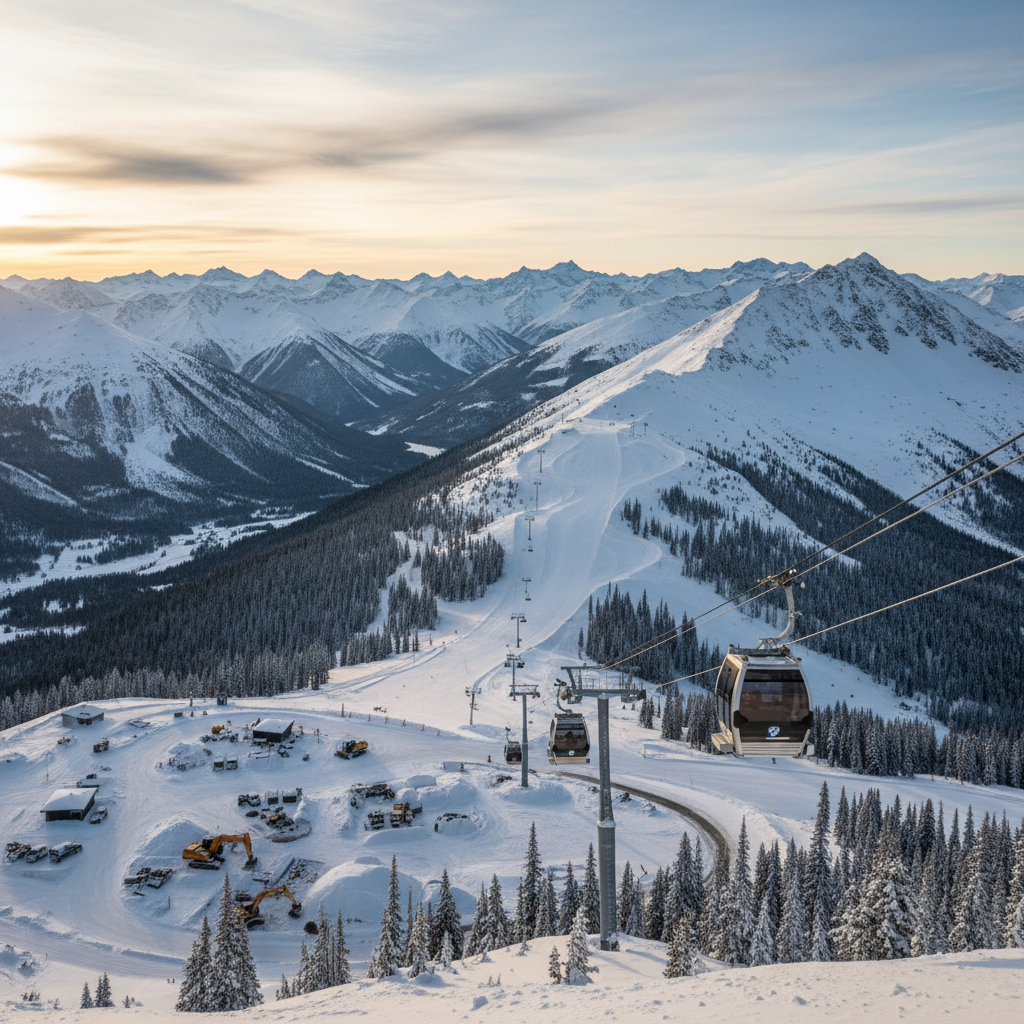
The centerpiece of this expansion is the East Village Express Gondola, a 10-passenger lift that provides direct access to the new terrain. This infrastructure investment goes beyond simple terrain additions. Deer Valley added 1,200 new snow guns and 350,000 feet of pipeline, along with three new pump houses. The resort also constructed 1,200 additional day-skier parking spaces off Highway 40, directly addressing one of the perennial challenges at busy ski resorts—congestion and access.
What makes Deer Valley's expansion particularly significant is how the resort handled growth without sacrificing its core value proposition. The daily skier cap remains in place across all terrain. This preservation of the uncrowded experience is crucial for understanding why Deer Valley maintains premium pricing and property values. You're not just getting more terrain; you're getting more terrain while maintaining the exclusive feel that defines the resort.
The $5 billion village development at the base adds another dimension to this transformation. Grand Hyatt, Four Seasons, and Waldorf Astoria are establishing new properties, with residential offerings ranging from $2.3 million to $14.5 million. This level of luxury hospitality investment indicates the scale and confidence driving the expansion.
Modern Lift Technology: Speed, Efficiency, and Access
Beyond terrain additions, the ski industry is revolutionizing how lifts operate. Modern chairlifts and gondolas aren't just faster—they're smarter, more efficient, and designed with passenger comfort in mind.
Snowbasin Resort, one of the largest ski resorts in the United States, recently completed the Becker Chair and introduced the DeMoisy Express, a new high-speed lift. These installations represent the current standard in lift technology. High-speed detachable quads (HSQ) and six-packs are becoming the baseline for major resorts rather than premium additions.
The technology underlying modern lifts has advanced significantly. RFID (Radio Frequency Identification) gates are being installed at major resorts, streamlining the ticketing process and improving lift operations. These systems reduce wait times by optimizing loading and provide data that resorts use to manage terrain capacity more effectively.
Why does this matter to skiers? Several concrete benefits emerge:
- Reduced vertical time: A modern HSQ can move significantly more skiers per hour than older lifts, meaning shorter lines and more runs per day
- Improved safety: Modern lifts include advanced braking systems, weather monitoring, and passenger comfort features
- Better access to terrain: Strategic lift placement ensures that new terrain connects logically to existing areas
- Year-round reliability: Modern lifts operate in a wider range of weather conditions
Regional Terrain Expansions and What They Mean
While Deer Valley's expansion dominates headlines, other significant projects are underway across North America. These expansions follow different philosophies and serve different skiing communities.
Interior British Columbia and Alberta: The Powder Highway Advantage
Resorts along the Powder Highway, including Revelstoke Mountain Resort and Kicking Horse Mountain Resort, have been investing strategically in terrain access and infrastructure. While exact expansion figures vary, these resorts compete partially on terrain size but more significantly on snow quality and backcountry access.
Lake Louise Ski Resort in Banff National Park shattered a 75-year-old snowfall record during the 2025-2026 season, receiving 111 inches in December 2025 alone. When resorts invest in terrain expansion in snow-rich areas like this, they're betting on consistency and powder quality as much as acreage.
Beginner and Family Terrain Expansions
Not all expansions focus on expert terrain. Many resorts are prioritizing beginner and family-friendly areas, recognizing that terrain diversity drives overall visitor satisfaction and loyalty.
Snowbasin and similar resorts are dedicating resources to beginner terrain upgrades alongside advanced terrain additions. This approach makes sense: while expert skiers dominate social media and marketing, families and beginners represent the sustainable core of most resort operations.
The Infrastructure Effect: Beyond Just More Runs
When major resorts expand, they don't just add terrain—they upgrade entire systems. At Deer Valley, the expansion included upgrading the Snow Park base area and connecting both sides of the resort through a unified lift system and skier management system.
This "infrastructure effect" creates cascading benefits throughout the resort ecosystem:
- Improved traffic flow: New base areas and parking alleviate congestion at traditional entry points
- Enhanced snowmaking coverage: New pipeline systems and pump houses support snow reliability across expanded terrain
- Better service areas: Modern base villages include restaurants, rental facilities, and retail spaces designed for higher volume
- Enhanced mountain operations: Unified systems mean better weather monitoring, avalanche control, and emergency response
How Expansions Impact Different Skier Categories
Expert and Advanced Skiers
Expansions typically include significant new advanced and expert terrain. The approximately 100 new runs added at Deer Valley include challenging options that appeal to expert skiers. For this demographic, the critical metrics are vertical drop, pitch variety, and access to untracked snow—all of which improve with proper expansion planning.
When considering expert ski resorts, look for expansions that add high-elevation terrain or backcountry access rather than just acreage. Quality of new terrain matters more than quantity.
Intermediate Skiers
Intermediate terrain typically represents 40-50% of most resorts' offerings, yet it's often overlooked in expansion discussions. Smart resorts recognize that intermediate skiers represent their largest repeat customer base and invest accordingly in groomed run variety and modern lift access.
Beginner-Friendly Resorts
For beginner-friendly ski resorts, expansions that include dedicated learning terrain and gentle grooming are particularly valuable. Resorts investing in family-oriented expansion understand that introducing new skiers to the sport creates decades of customer loyalty.
The Snow-Sure Factor: Why Terrain Expansion Requires Infrastructure Investment
A critical point often missed in discussions of terrain expansion: more terrain requires reliable snow cover. This is where snowmaking infrastructure becomes absolutely essential.
Deer Valley's addition of 1,200 snow guns represents not just investment volume but strategic placement. Modern snowmaking systems require extensive pipeline networks, multiple pump houses to maintain water pressure, and sophisticated management systems to optimize gun deployment.
During the 2025-2026 season, western resorts faced significant challenges. Bluewood temporarily closed in early February due to thin snowpack, and New Mexico saw record warmth force early season closures. In contrast, resorts with robust snowmaking infrastructure maintained operations through challenging conditions.
For skiers seeking guaranteed snow, expansions should be evaluated not just on terrain acreage but on snowmaking investment. A 500-acre expansion with minimal snowmaking is less valuable than a 200-acre expansion with comprehensive coverage.
The Economic Ripple Effect: Why Expansions Matter Beyond the Mountain
When Vail Resorts invested $50 million in Park City Mountain Resort following their 2014 acquisition, pending sales increased 43 percent within six weeks. This demonstrates that major lift and terrain investments don't just improve skiing—they reshape entire resort communities.
Deer Valley's $5 billion Expanded Excellence project far exceeds this precedent. The project includes the $5 billion village development with ultra-luxury residential offerings, three globally recognized hotel brands, and extensive commercial infrastructure. If historical precedent holds, this represents a generational transformation affecting property values, business development, and community character throughout Park City and the surrounding Utah ski region.
For visitors, this matters because investment in resort infrastructure typically correlates with improved service, better amenities, and more reliable operations. Resorts expanding are by definition investing in their future, not managing decline.
Planning Your Visit to Expanded Resorts in 2026
If you're considering visiting a resort with significant recent expansions, several strategic considerations improve your experience:
Timing Your Visit
New terrain often experiences high demand from curious skiers. Consider visiting in shoulder season or mid-week to experience new runs with shorter lines. Late February through March typically offers good powder from late-season storms with fewer crowds than January-February peak season.
Terrain Familiarization
When visiting expanded resorts like Deer Valley, prioritize exploring the new terrain systematically rather than randomly. Modern mountain websites typically include updated trail maps highlighting new runs. Download these before your trip.
Lift Strategy
New lifts dramatically change traffic patterns. At Deer Valley, the East Village Express Gondola and new base area parking mean different optimal access points depending on terrain preferences. Starting your day at less-obvious entry points often yields shorter lines to popular new runs.
Service Expectations
Expandions sometimes stress service infrastructure during early seasons. Rental shops, food service, and restroom facilities may experience higher-than-normal demand. Arriving early and planning longer lunch breaks helps navigate this temporary congestion.
Comparing Expansion Strategies Across Resorts
Different resorts take different approaches to expansion, reflecting their markets and philosophies:
- Deer Valley's approach: Aggressive expansion with maintained daily skier cap prioritizes experience quality and premium positioning
- Regional resort strategies: Resorts in the Rockies often focus on lift access to existing terrain rather than raw acreage expansion
- Beginner-focused expansion: Family resorts invest in terrain diversity and learning areas rather than aggressive vertical expansion
- Backcountry-accessible resorts: Mountain communities like those in the Alps increasingly expand lift access to backcountry terrain rather than in-bounds runs
Looking Forward: The Expansion Trend Continues
The 2026 expansion wave reflects broader industry confidence. After challenging seasons, major capital investments signal that ski resorts expect strong demand for years to come. Developers, hotel companies, and residential investors are placing billion-dollar bets that skiing's appeal isn't declining—it's evolving.
For skiers, this is good news. Competition among resorts drives quality improvements, better service, and more diverse offerings. Whether you're seeking family-friendly ski experiences, budget options, or extreme expert terrain, expanded and modernized resorts provide better experiences.
Key Takeaways for Your Next Ski Trip
As you plan your skiing future in this era of major expansions and lift upgrades, remember these actionable insights:
1. Terrain expansion doesn't guarantee better skiing for you personally. Evaluate new terrain against your skill level and preferences rather than assuming bigger always means better.
2. Lift technology matters more than you might think. Modern HSQ lifts and gondolas reduce time spent traveling, meaning more runs per day and less frustration.
3. Infrastructure investment indicates resort health. Resorts expanding are betting on their future, typically leading to improved overall operations and service quality.
4. Snowmaking infrastructure is as important as terrain acreage. When evaluating resorts, consider snowmaking investment alongside expansion size.
5. Expansions reshape resort communities. Beyond the mountain, resort expansions create new dining, lodging, and retail opportunities that enhance the overall experience.
6. Visit timing matters. New terrain attracts crowds. Strategic timing of your visit maximizes your experience of expanded resorts.
7. Different expansion strategies serve different skiers. Understanding a resort's philosophy helps ensure you're visiting a place aligned with your needs.
The 2026 ski season represents a watershed moment in North American skiing. Major investments in terrain, lifts, and infrastructure are creating unprecedented opportunities for skiers of all abilities. Whether you're visiting newly expanded Utah resorts, exploring the Canadian Rockies, or investigating other North American destinations, understanding these transformations helps you make informed decisions and maximize your mountain experience.
The era of aggressive ski resort expansion is here. The question isn't whether to visit these transformed mountains—it's which one fits your skiing style and when to go. Your next unforgettable ski vacation may well be waiting on terrain that didn't exist two years ago.