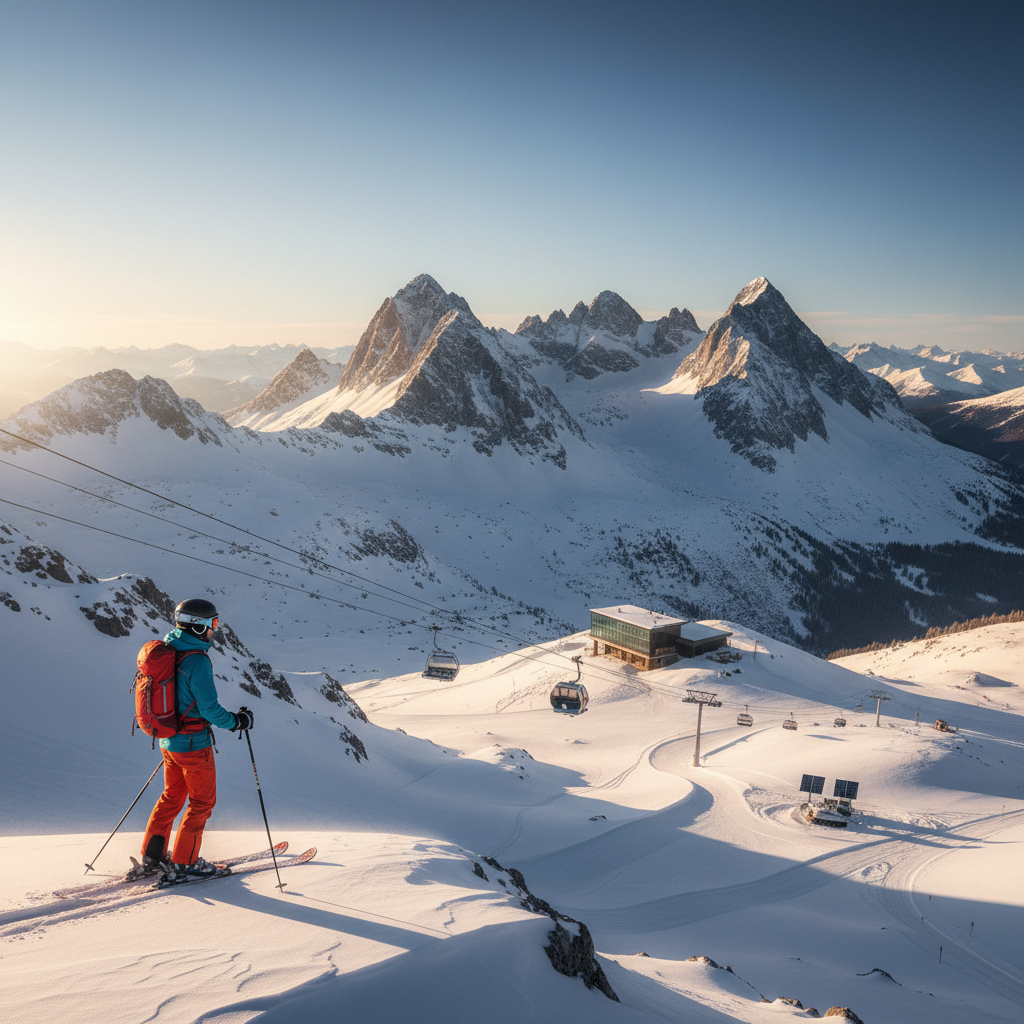
Ski Industry Trends and Innovations: What’s Changing on the Mountain
Skiing is changing—and the best innovations affect your next trip
A new chairlift is easy to notice. The quieter changes—better snowmaking controls, smarter lift access, or a pass that suddenly includes a resort overseas—can be just as important to your holiday. Across the ski industry, resorts are investing in infrastructure, adapting to less predictable winters, and competing to make mountain days smoother and more memorable.
The 2025–26 season offers a revealing snapshot. OnTheSnow’s roundup of resort upgrades points to major terrain projects at Deer Valley, lift replacements from Colorado to Washington, and snowmaking investments across North America. Sun Peaks, meanwhile, is trialling a Finnish-developed approach to storing snow through summer. Industry conversations are also broadening: at the 2026 Ski Industry Climate Summit in Bolzano, brands, researchers, recyclers, and NGOs discussed circular business models, product lifecycles, recycling, mobility, and climate action.
These developments matter whether you’re an expert chasing fresh terrain, a parent looking for easier beginner access, or a value-minded skier trying to make a pass pay off. Here are the most important ski industry trends and innovations to understand—and practical ways to use them when planning your next trip.
1. Snow reliability is becoming a technology story
Snowmaking has long been part of resort operations, but investment is increasingly focused on reliability, efficiency, and when snow can be made—not simply on adding more machines. Resorts need to use suitable cold-weather windows strategically, prepare key routes, and make limited water and energy go further. This is especially relevant as winter conditions become less predictable at some elevations.
Several 2025–26 projects illustrate the direction. Killington in Vermont installed 1,000 new low-energy snowmaking elements as part of a wider improvement programme. Copper Mountain in Colorado continued a multi-year investment intended to improve early-season snowmaking, with infrastructure upgrades reaching eight trails. At Sugarloaf in Maine, increased water-flow capacity is intended to improve snow quality and open terrain faster. Palisades Tahoe added automated snowmaking fans, compressors, and pipe and valve improvements, alongside work to increase available water.
The practical takeaway is that “snowmaking upgraded” does not mean every run is guaranteed to open on a particular date. It can, however, improve the odds of having essential routes and beginner areas available, especially early in the season. Before booking a low-elevation or early-season trip, check the resort’s terrain status and operating calendar rather than relying on a past opening date. For alternatives with a stronger reputation for reliable coverage, compare destinations in our snow-sure resort guide.
Snow storage: keeping winter for later
One of the more striking experiments is at Sun Peaks, where the resort adopted a snow-storage system developed in Finland. The idea is to preserve snow through summer and reuse it at the start of the following season. The resort has described the project as a first for Canada and linked it to a broader, multi-year snowmaking upgrade.
Snow storage is not a magic fix for climate change, and it is not a substitute for healthy natural snowfall. It is better understood as one tool in a larger operating plan: retaining snow that already exists, targeting priority areas, and potentially improving early-season readiness. For travellers, that may eventually mean more dependable opening terrain—but the result will depend on conditions, the scale of storage, and the resort’s wider snow programme.
2. Lifts are being rebuilt for flow, comfort, and access
Lift upgrades are among the most visible investments because they can change how a day feels. A faster chair may reduce queues or make it easier to reach a favourite sector, while a new beginner carpet can make a first lesson less intimidating. But lift capacity alone does not guarantee a better experience: trail access, bottlenecks, weather, and peak-day demand still matter.
At Deer Valley in Utah, a major expansion brings more than 2,900 acres of new terrain and seven new chairlifts, along with a new East Village base area and a 10-passenger gondola. The resort’s new Green Monster trail is planned at 4.85 miles. Such a large expansion can spread visitors across more terrain, but skiers should study the trail map before arrival and allow time to learn how the new sectors connect.
Other upgrades are more targeted. Aspen Snowmass replaced its Elk Camp Quad with a high-speed six-pack. Loveland installed a new fixed-grip quad to replace a 42-year-old lift. Crystal Mountain in Washington replaced its 37-year-old Rainier Express with a high-speed quad, and Killington upgraded its Superstar Express to a six-pack. These projects show the range of priorities: improving uphill capacity, refreshing ageing infrastructure, and making access more comfortable.
Beginner access is part of the same trend. Loon Mountain in New Hampshire introduced a new magic carpet called Little Sass, designed for a shorter, more approachable ride. Sundance in Utah added new terrain and a high-speed quad as the first stage of a planned expansion. When booking a family or first-time ski holiday, look beyond the headline lift name: check whether the beginner area is separated from fast traffic, whether lessons start near the lift, and whether rentals are close by. Our beginner-friendly resort guide can help narrow down options.
3. Terrain expansion is changing how resorts compete
For many resorts, growth now means more than a new lodge or lift. Expanding the skiable footprint can offer fresh routes, reduce pressure on established pistes, and create a reason for returning guests to explore. Deer Valley’s large expansion is the most dramatic example in this season’s North American news, while Sundance is opening 60 acres and nine trails as part of a two-year plan to add 165 acres.
Sun Valley in Idaho is developing additional gladed terrain, building on 350 acres of glades created in previous years. Lake Louise in Alberta is planning a new high-speed quad to reach five beginner and intermediate trails, with access expected in spring 2026. The mix matters: new terrain is not solely about steep expert runs. Resorts also use expansions to create more options for learners and progressing intermediates.
Before travelling specifically for a new zone, confirm what is actually open for your dates. Construction announcements often describe a multi-year project; a resort’s marketing map may show future phases that are not yet skiable. Check the latest piste map, opening notices, and lift status, and ask whether access requires a particular base area or transfer. If you want to compare mountain scale and terrain across countries, explore the Alps or browse Rocky Mountain ski resorts.
4. Multi-resort passes are becoming international travel planners
The pass market is changing the way skiers choose destinations. Rather than buying every lift ticket separately, many travellers now start with a pass and build a trip around its included resorts, blackout dates, and day limits. The trend is increasingly international: OnTheSnow reports that Ikon’s 2025–26 offering included access in Europe, Canada, and Asia, while Epic added six Austrian destinations.
For example, Ikon access included days at Italian resorts such as Courmayeur, Cervino, La Thuile, Monterosa Ski, and Pila, as well as seven days at Ischgl in Austria. Epic’s Austrian additions included Sölden, Saalbach, Zell am See-Kaprun, Mayrhofen, Hintertux, and Silvretta Montafon. Its Local Pass also included limited access to Verbier 4 Vallées in Switzerland, subject to the product’s rules. These offers create new combinations for skiers who want to pair a major resort with a different region or country.
At the same time, smaller products target occasional skiers and newcomers. The Indy Pass Learn-to-Turn product bundled lessons, rentals, and lift tickets at participating resorts, while the Snow Triple Play offered a limited number of days at participating mountains in New England and Eastern Canada. These options reflect a wider effort to lower the initial barrier to skiing, though availability and terms can change from season to season.
A pass is not automatically a bargain. Before buying, add up the days you will genuinely ski, check reservation requirements and blackout dates, and include travel costs between resorts. If you are planning an Alpine trip, compare destinations in Austria and Italy against your pass’s actual access list. For more ways to keep a European ski holiday affordable, see our budget European resorts guide.
5. Resort operations are getting more data-led
Behind the guest-facing changes is a growing emphasis on operational data. Mountain operators have to coordinate lifts, snowmaking, grooming, staffing, parking, and weather decisions across complex terrain. Sensors, forecasting tools, and digital systems can help teams make more informed choices—for example, identifying where snow coverage needs attention or where visitor flows are building.
This is not a promise that every mountain will soon be run by artificial intelligence. Rather, it reflects a broader move toward using data to improve decisions and reduce waste. Industry discussions in 2026 have highlighted AI’s potential in areas such as grooming, traffic flows, risk prevention, visitor services, and resource management. The most useful innovations may be the ones guests barely see: a slope prepared more consistently, a lift operation adjusted to demand, or better information about conditions before leaving the lodge.
Digital tools are also changing the planning stage. Resort apps and snow-report platforms help travellers check lift status, webcams, and forecasts. Snow-Forecast provides forecasts at top, middle, and bottom lift elevations, a useful distinction because conditions at the summit can differ substantially from those at the base. Use forecasts as guidance, not guarantees: mountain weather can shift quickly, and precipitation estimates are not a promise of fresh powder on every run.
For a practical forecast routine, check the resort report and a reputable weather forecast the evening before, then recheck in the morning. Match your expectations to elevation, aspect, wind, and freezing levels. If visibility or avalanche conditions are concerning, adjust your route and follow local patrol advice rather than chasing a forecast number.
6. Sustainability is moving from statements to systems
Skiing depends on winter landscapes, so climate responsibility is not a side issue for the industry. The challenge is to distinguish useful, measurable work from broad claims that are difficult to verify. The 2026 Ski Industry Climate Summit brought together businesses and organisations to discuss practical themes including circular business models, product lifecycles, recycling technology, mobility, and shared environmental data.
At resort level, snowmaking efficiency, water management, and snow retention are central concerns. Lift upgrades can also improve capacity and guest flow, but their environmental effects depend on construction, energy sources, transport patterns, and how the resort manages surrounding ecosystems. There is no single upgrade that makes a ski area sustainable. Progress is better judged through transparent goals, measured energy and water use, and credible reporting over time.
Travellers have choices too. Take a train or shared transfer where practical, stay close to lifts, avoid unnecessary daily driving, and choose equipment you can maintain and use for multiple seasons. Renting can be a sensible option for occasional skiers, while buying durable equipment and getting it tuned may make more sense for frequent visitors. Ask resorts about transport links and sustainability reporting instead of relying only on marketing language.
7. The guest experience is broader than lift lines
Resorts are competing on the whole trip, not only the vertical metres skied. Big Sky in Montana introduced Kircliff, a glass alpine summit observatory at 11,166 feet. Schweitzer in Idaho added sunrise breakfasts with early lift access and summit dining experiences. Arizona Snowbowl upgraded Wi-Fi, sales systems, and its rental fleet. These examples show how operators are trying to make mountain visits more convenient and appealing to non-skiers as well as avid riders.
Parking and arrival logistics are also receiving attention. Park City Mountain planned a new garage at Canyons Village and introduced policies that reward carpools in certain lots. Palisades Tahoe introduced carpool reservations for vehicles with four or more occupants, with a voucher incentive described for eligible groups. These measures respond to a familiar problem: popular resorts can feel crowded before visitors even reach the lift.
Make arrival part of your itinerary. Check whether parking must be reserved, whether a shuttle operates from your accommodation, and when the first lift loads. If you are travelling with a group, agree on a meeting point and share the resort’s transport information before the day. Small preparations can save more time than a faster chairlift.
What these trends mean for your next ski holiday
The industry is changing in practical ways: resorts are investing in more efficient snowmaking and snow storage, modernising lifts, adding terrain, broadening pass access, and improving digital information and guest services. Some changes are established upgrades; others, such as large-scale snow storage or new AI applications, remain evolving approaches whose long-term benefits still need to be demonstrated.
The smartest planning response is to verify details rather than assume. A new lift may open in stages. A pass may have restrictions that affect your dates. A snowmaking project may improve early-season reliability but cannot erase weather uncertainty. And a resort’s new terrain may be aimed at a particular ability level, not everyone.
Actionable takeaways
- Check what is open for your dates. Use live trail and lift reports, particularly for early-season trips and newly expanded areas.
- Compare pass rules before buying. Verify included days, reservations, blackout dates, and travel time between resorts.
- Choose terrain for your ability. Review the piste map and confirm whether new lifts serve beginner, intermediate, or expert runs.
- Plan for mountain weather. Compare forecasts at different elevations and follow local safety guidance.
- Reduce avoidable travel friction. Reserve parking if required, arrange shared transport, and check shuttle schedules.
- Look for evidence behind sustainability claims. Prioritise measurable progress on energy, water, transport, and waste.
- Keep a backup plan. Have another resort, activity, or flexible ski day in mind if weather or operations change.