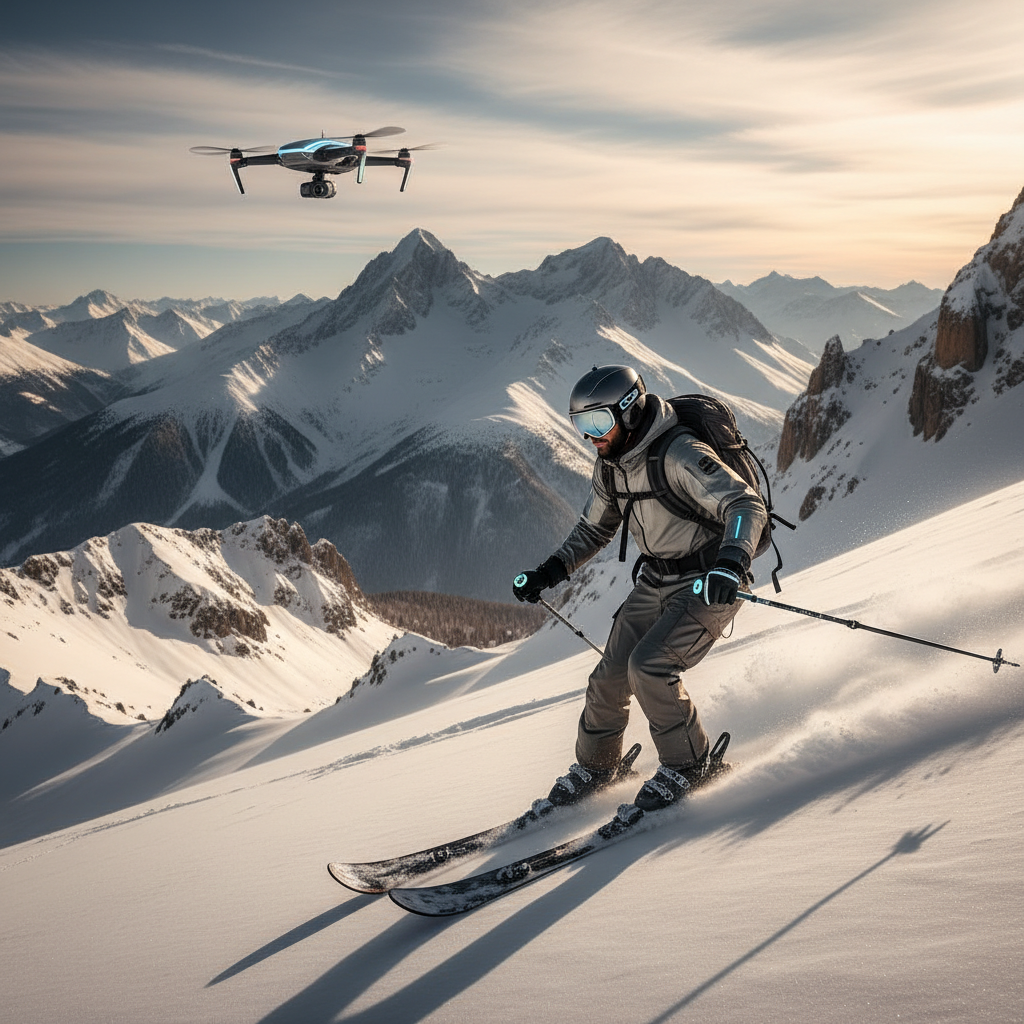
New Ski Technology & Gear 2026: The Innovations Every Skier Should Know About
The Future Is Carving In: Why Ski Tech Matters More Than Ever
Walk through any ski shop now and you’ll see it immediately: skis with visible dampening systems, helmets with integrated sensors, airbag packs that talk to your phone, and boots that fit better out of the box than your last pair did after three shell punches.
Ski technology is moving fast, and if you’re planning a trip to the Alps, Scandinavia, or North America this winter, understanding what’s new can genuinely change how much you enjoy your week on snow. Whether you’re lapping piste in Courchevel, hunting powder above St. Anton, or logging big days in Whistler Blackcomb, the right gear now makes skiing easier, safer, and more efficient than ever.
This guide breaks down the most important new ski technology and gear for 2026, with clear, practical advice on what’s worth upgrading and what you can skip.
1. Ski Design 2.0: What’s Really New in Skis?
Ski shapes haven’t radically changed in the last couple of years, but what’s happening inside the ski absolutely has.
Active Suspension, Vibration Control & Damping
Several brands now use built‑in suspension-style systems to calm chatter and keep your edges gripped at high speed. One example highlighted in recent industry coverage is skis featuring “Active Suspension Drive” technology, a construction designed specifically to provide a “suspension-like feel” and unmatched vibration dampening in chopped snow and on hardpack.[1]
For the average skier, that translates into:
- More edge hold on icy pistes
- Less leg fatigue at the end of the day
- A more forgiving ride in late‑afternoon bumps and crud
- If you love fast carving in big linked turns on the groomers—think open motorways above Val Thorens or long descents into Zermatt—look for ski descriptions mentioning dampening, suspension, vibration control or active suspension.
- Lighter or less aggressive skiers in softer-snow regions (for example many Italian Dolomites resorts around Cortina d'Ampezzo) may not need ultra-damp skis; a slightly livelier construction can feel more playful.
Metal, No Metal, and the New “Custom Feel” Trend
Brand lineups are also increasingly offering metal and non‑metal versions of the same model so skiers can pick their preferred feel.[3] Metal (usually Titanal) adds grip and stability at speed; non‑metal keeps the ski lighter and more playful.
This was highlighted in reviews of the new all‑mountain and freeride skis for 2026, where brands like Faction and others now offer multiple constructions in the same waist width to cover everything from carving in Chamonix to softer snow in the Rockies.[3][5]
How to choose:
- If you ski fast on-piste most of the time: go for metal-reinforced versions; they’re ideal for hard snow in higher, snow-sure resorts listed in guides like our snow-sure resorts overview.
- If you spend more time in soft snow or trees: the non‑metal variant is easier to pivot, more fun in bumps, and less tiring on long days.
Length-Specific Construction
New all‑mountain models in 2026 also use length-specific metal and flex patterns—for example, integrated Titanal plates that change thickness and layout depending on the ski’s length to keep the flex balanced across sizes.[5]
Why this matters:
- A short 162 cm ski and a 188 cm ski now feel like the same model scaled correctly, not two different skis sharing a name.
- Smaller or lighter skiers no longer get stuck with skis that feel like planks; bigger, stronger skiers can get properly stiff, confidence‑inspiring lengths.
2. Boots: Better Fit, Less Fuss
Boot tech is evolving quieter than skis, but the changes are hugely important because poorly fitted boots will ruin any trip, no matter how good your skis are.
Improved Lasts, Custom Liners and Heat Moulding
Modern overlap and hybrid boots increasingly come with:
- Pre-shaped shells designed around average anatomical data
- Heat-mouldable plastics that can be expanded in key areas
- High-quality thermoform liners that mould around your ankles and instep
Practical advice:
- Budget 1–2 hours in a proper bootfit shop before your trip, especially if you plan to ski demanding terrain in places like Verbier or Aspen.
- Prioritise boots over skis. If your budget is tight, read our budget ski resorts in Europe guide to save on trip costs and put more money into boots.
Walk Modes and Hybrid Touring Boots
Even if you never plan to ski-tour, the latest walk modes are worth considering:
- Walk mode gives significantly more cuff range of motion for walking through resort villages, climbing steps, or hiking a short bootpack to better snow.
- Many “resort-first” boots keep a solid alpine sole and DIN-certified bindings compatibility, so you don’t need special touring bindings.
3. Bindings & Safety Systems: Smarter Release, Lighter Frames
Bindings look similar at a glance, but the engineering inside continues to improve in ways you’ll feel, especially if you ski mixed terrain.
Multi-Norm Compatibility & Safer Release
More bindings now accept multiple sole norms (alpine, GripWalk, some touring), so you can use one binding for several boot types. Safe, predictable release is getting better, which is crucial when you’re charging variable snow.
What to look for:
- ISO certification for your boot/binding combo
- Adjustable toe height and AFD (anti-friction device) if you use GripWalk or touring soles
Lightweight Touring & Hybrid Bindings
Touring-capable bindings are getting lighter without losing much power transmission. If you dream of short tours above Alpine resorts or exploring beyond the lifts in the Pyrenees, current hybrid bindings are a realistic option for strong intermediate skiers.
Practical takeaway:
- If 90–100% of your skiing is lift-served, stick with a modern alpine binding—it’s still the safest, most robust option.
- If 20–40% of your skiing will be tours or sidecountry, consider a hybrid frame or pin binding but make sure it’s properly mounted and adjusted by a shop.
4. Outerwear & Fabrics: Lighter, Smarter, More Inclusive
Many of the biggest innovations for 2026 are in outerwear, especially in fit and fabric tech.
New Fabrics & Breathability
Gear-focused outlets have highlighted new shells and insulated pieces with higher breathability, more durable face fabrics, and refined fits that work better with modern boots and high‑activity skiing.[2][4]
Key trends:
- Higher “real world” breathability: Fabrics are now tested more rigorously, meaning fewer sweaty back panels on long mogul runs.
- Improved durability: Face fabrics are tougher while still feeling supple, ideal for tight tree runs in North America or rocky entrances to couloirs in France.
- Better fit over boots and layers: Brands are finally nailing pant patterns that work with ski boots and different body shapes, an issue repeatedly called out and praised when done right.[2][4]
- For cold, dry climates (e.g. Finland or Norway), insulated shells or a solid layering system are essential.
- For milder, changeable weather in the Dolomites, a breathable shell plus flexible mid‑layers will keep you comfortable from sunny lunches to snowy afternoons.
Fit and Function: The Pant Problem (Finally) Getting Fixed
Recent gear reviews have specifically praised brands that finally solve the long‑standing problem of ski pants that fit in the waist, allow freedom of movement, and work over boots at the same time.[2][4]
Why this matters:
- Better fit means less bunching around knees and boots, which makes skiing smoother and lowers fatigue.
- Good patterning helps you move more athletically, which is key when you’re working on technique in the kind of beginner-friendly terrain covered in our beginner ski resorts overview.
- Prioritise mobility and comfort over extra pockets and gimmicks.
- Try pants on with your actual ski boots if possible, or at least with thick socks and a similar cuff volume.
5. Goggles & Helmets: Electronics, Lenses and Head Protection
Helmet and goggle tech has quietly become some of the most impressive innovation on the mountain.
Advanced Impact Protection
Most modern helmets now use some form of rotational impact protection (like MIPS or similar systems). The goal is to reduce rotational forces on your brain in the most common type of crash.
What to look for in a 2026 helmet:
- 2nd‑ or 3rd‑generation rotational systems, which are lighter and better integrated
- A precise fit system and a shell shape that matches your head
- Compatibility with your goggles to avoid gaps or pressure points
Lens Tech: Contrast and Auto-Tint
Goggle technology continues to improve with:
- High-contrast lens tints that enhance bumps and undulations in flat light
- Magnetic lens swaps for quick changes on the lift
- Increasingly accessible photochromic lenses that automatically adjust to light conditions
Buying advice:
- Choose one high-contrast all‑round lens plus a low‑light lens rather than chasing full lens quivers.
- If you often ski short trips or weekends in variable weather, a good photochromic lens can be worth every penny.
Smart Helmets and Integrated Audio
Newer helmets increasingly integrate low‑profile audio systems, and a few “smart helmets” offer built-in communication systems. While far from essential, they can make family or group skiing easier by enabling two-way communication without taking your gloves off.
Safety tip: Keep volume low so you can still hear people and snow conditions. Audio should never compromise awareness—especially on busy pistes in popular areas like the Three Valleys around Courchevel.
6. Avalanche, Touring & Safety Tech: Smarter Backcountry Tools
If you venture beyond the markers—even on mellow routes—modern safety gear is non‑negotiable.
Modern Transceivers & Group Management
The latest transceivers emphasise:
- Intuitive interfaces and screens for faster search times
- Better multiple-burial management
- Stronger self-check and battery indicators
Avalanche Airbags Get Lighter and Smarter
Airbag packs have steadily become:
- Lighter, making them realistic for day tours and sidecountry laps
- More compact, with better internal organisation for shovel and probe
- In some cases, compatible with connected features such as remote diagnostics or app integration, making them simpler to maintain and test[7]
- If most of your skiing is in‑resort but you take the odd guided off‑piste day (for example, during a week in Switzerland or France), consider renting airbags on-site rather than buying.
- If you’re doing regular touring in regions covered by our Nordic skiing comparison guide, an airbag is a serious long-term investment.
Touring-Specific Tech: Skins, Lightweight Skis & Electric Assist
Recent gear coverage has also highlighted innovations like electric-powered ski touring skis: systems that integrate low‑profile electric assistance into the ski for uphill travel.[7] While still niche and expensive, they show how quickly touring technology is evolving.
More immediately relevant for most skiers:
- Lighter touring skis and skins now add far less weight to your pack, making short tours from lift-accessible summits in the Alps more realistic.
- Skins glide and grip better than older models, reducing the “drag” that used to make first tours exhausting.
- If you’re curious about 1–2 hour introductory tours, ask local shops in touring-friendly resorts (e.g. many Italian and Austrian areas) about light rental setups.
- For steep lift-served freeride terrain, focus on avi gear + education first, then worry about touring-specific skis.
7. Accessories & Gadgets: The Small Things That Make Big Days Easier
Some of the most interesting 2026 innovations are in accessories: small items that can massively improve comfort or safety.
Heated Socks, Gloves and Boot Warmers
Modern heated socks and gloves are thinner, last longer, and integrate with phone apps for control. For cold-prone skiers in Scandinavia or higher-altitude Canadian resorts, these can be the difference between skiing until last lift and bailing at lunchtime.
Tips:
- Always pack spare batteries or a small power bank.
- Test the gear at home so you know how to operate it with gloves on.
Wearable Tech: Watches, Trackers and Apps
Ski-specific features on smartwatches and phones are now standard:
- Run tracking and vertical metres climbed
- Navigation on resort maps
- Basic SOS features in some devices
Novelty Meets Function: E-Gadgets and Smart Accessories
Roundups of new ski gadgets highlight items from electric-powered touring skis to advanced impact sensors and smart insoles.[7]
While not all of these are must-buys, they often push innovation forward in ways that eventually filter down into mainstream gear: better batteries, more accurate motion sensors, and improved materials.
Rule of thumb: If a gadget directly improves comfort, warmth, or safety, it’s worth considering. If it mostly adds data you won’t act on, it’s probably not worth the weight or cost.
8. How to Decide What’s Worth Upgrading
With so much new ski technology around, it’s easy to feel like you need a full kit refresh each season. You don’t. Focus on where innovation will make the biggest real-world difference for you.
Step 1: Be Honest About Where and How You Ski
Ask yourself:
- Do I mostly ski groomed pistes in big European resorts?
- Am I heading to snow-sure, high-altitude destinations (see our snow-sure resorts guide) where ice and hardpack are common?
- Do I regularly ski off-piste or tour?
- Am I booking trips to North America (see our North America ski overview) where tree skiing and deeper snow are likely?
- Piste-focused: Skis with modern dampening tech, properly fitted boots, and a high-quality goggle lens.
- Freeride/off-piste: Safety gear (transceiver, shovel, probe, possibly airbag) plus modern helmet tech.
- Touring-curious: Lightweight bindings and skins, hybrid boots, but still with an emphasis on safety.
Step 2: Upgrade in This Order
1. Boots and Fit: The most important piece of gear. A 2018 ski with a perfectly fitted 2026 boot will ski better than the reverse. 2. Skis: Especially if your current pair is more than 8–10 years old; modern construction is a genuine step forward. 3. Helmet & Goggles: New impact tech and better lenses improve both safety and enjoyment. 4. Outerwear: Only if your current kit lets in wet or cold, or seriously restricts movement. 5. Specialised Gadgets: Heated accessories, smart watches, novelty items—nice extras once the basics are dialled.
Step 3: Match Gear to Destination
- For steep and varied terrain in the Alps, consult guides like best ski resorts in France and choose gear that handles hard snow, bumps, and occasional powder.
- For colder climates and potential night skiing in Sweden or Norway, layers and heated accessories become more important; see our Sweden vs Norway comparison for context on conditions.
- For deep powder and trees in the Rockies—from Vail to Whistler Blackcomb—consider skis with a bit more width and rocker, plus goggles optimised for storm days.
9. Actionable Takeaways: Your Next Steps Before the Season
To wrap this up into something you can use right now, here’s a simple checklist to prepare for your next ski trip—whether it’s a quick long weekend in Austria or a full‑blown family adventure to Canada.
Gear Audit (At Home)
- Boots: Check for shell cracks, worn soles, or packed-out liners. If your boots are more than 6–8 years old or hurt every day by lunch, plan a replacement and use our resort and country pages (like Austria or France) to find larger towns with good bootfitters near your destination.
- Skis: If your skis predate rocker or feel unstable on ice, shortlist new models with modern dampening and, if needed, metal reinforcement.
- Bindings: Ensure they’re indemnified (still supported by the manufacturer) and have a shop test the release.
- Helmet: Replace any helmet older than ~5–7 years, or one that’s suffered impacts.
- Goggles: If you can’t see bumps in flat light, it’s time to upgrade lenses.
Smart Upgrades for 2026
- Want more stability and less chatter on hard pistes? Look for skis with active suspension/dampening tech and possibly length‑specific metal construction.[1][3][5]
- Struggle with cold feet or hands? Invest in modern heated socks or gloves and consider better‑fitting boots.[2][7]
- Curious about the backcountry? Before buying touring skis, prioritise a course and basic avi kit (transceiver, shovel, probe) plus a modern helmet.
- Planning to ski late season in April? Check our snow-sure April resorts guide and choose gear (and wax) tuned for warmer, variable snow.
On-Trip Tactics
- Demo whenever possible: many larger resorts (especially in France, Austria, Switzerland, and North America) offer demo centres where you can try 2026 skis with cutting‑edge tech before you commit.
- Don’t underestimate proper tuning: sharp edges + fresh wax can make your old skis feel half-new, especially on icy mornings.
- Adjust clothing layers daily according to the forecast; high-tech jackets don’t help if you wear the wrong base layer.
New ski technology and gear in 2026 is not just about flashy marketing. It’s about more forgiving skis on hard snow, boots that fit better with less work, helmets that protect more effectively, goggles that let you actually see in a whiteout, and safety tools that buy you precious seconds when it matters most.
Pick the innovations that match how and where you ski—whether that’s big‑mountain terrain in the Alps, cold, dark winters in Scandinavia, or deep powder in the Rockies—and you’ll feel the difference from your very first run of the season.