Black Crows Skis: From Chamonix Freeride Roots to the 2026/27 Line-Up
Black Crows Skis: Chamonix DNA Meets Modern Freeride Design
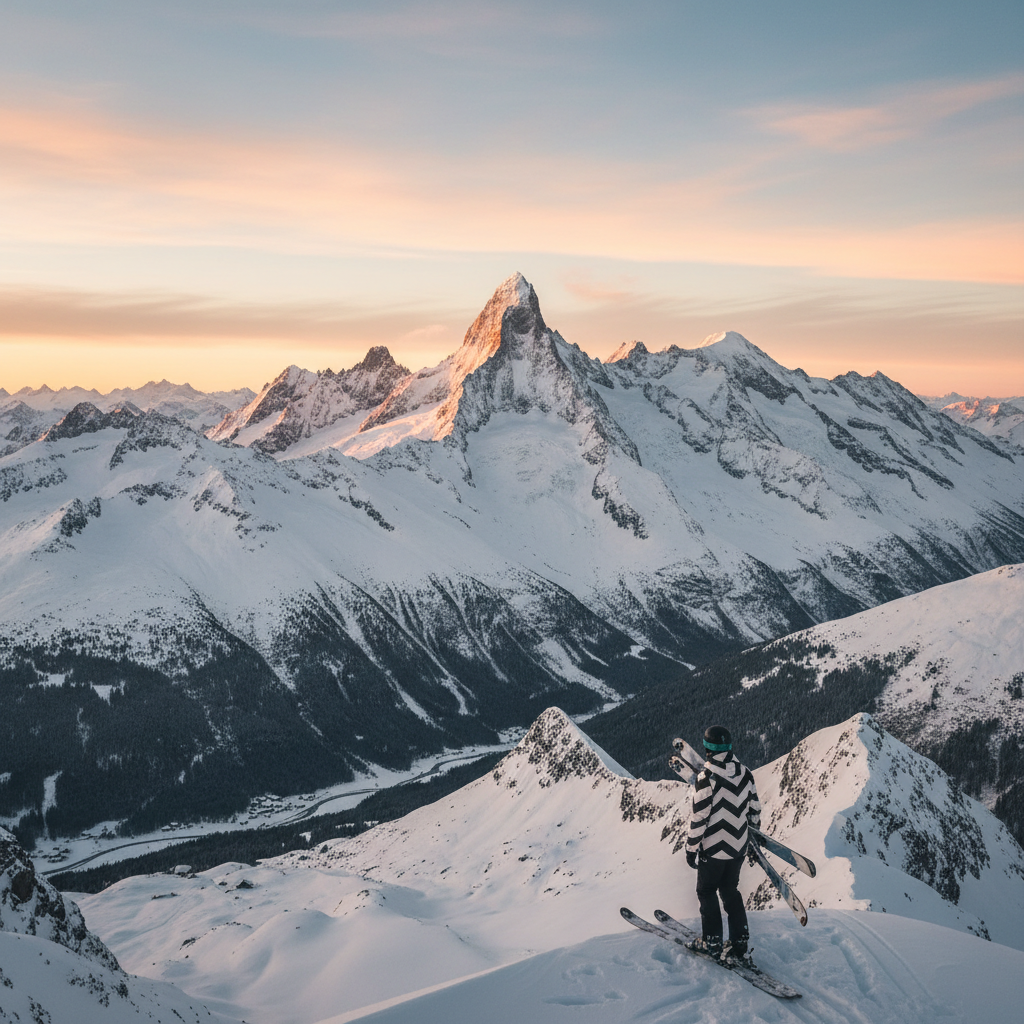
If you’ve spent any time queuing for first lift in Chamonix or scoping lines above Verbier, you’ve almost certainly spotted the distinctive chevron pattern of Black Crows skis. The brand has become synonymous with modern freeride culture: playful yet powerful, stylish but seriously functional. For skiers planning trips to big-mountain destinations like Chamonix, Verbier or Val Thorens, understanding what Black Crows is all about can help you pick the right weapon for your next powder day.
This guide walks through the brand’s Chamonix roots, their design philosophy and core ski families, then looks at the new 2026/27 Black Crows range and which skis make the most sense for your style and the terrain you love.
The Black Crows Story: From Chamonix Lift Line to Global Brand
Founded by Freeriders, Not Marketers
Black Crows was founded in Chamonix-Mont-Blanc, the spiritual home of European big-mountain skiing, by French pro skiers Camille Jaccoux and Bruno Compagnet. Both had logged countless seasons lapping iconic lines off the Aiguille du Midi and dropping into the Vallée Blanche, and both were frustrated by the skis available at the time: either ultra-racey tools or floppy powder noodles with poor stability.
Their idea was simple but ambitious: build a ski that could charge at speed in variable, high-alpine snow while remaining playful and maneuverable enough to navigate tight couloirs and mixed terrain. Chamonix’s brutal combination of steep faces, wind-affected snow and long runouts became their test laboratory.
The Origin of the Name and Chevron Logo
The name “Black Crows” is a nod to mountain life rather than marketing spin. Alpine crows – actually choughs – are a constant presence in the high peaks, circling cliffs and following climbers and skiers as they move through the terrain. That image of birds weaving fluid lines through the sky resonated with the founders’ vision of freeride skiing.
The famous chevron logo mirrors this idea: a flock of stylized birds in flight and, at the same time, a geometric pattern that looks clean and modern on a topsheet. Over time, this graphic identity became one of the most recognizable visuals on any ski rack, and Black Crows leaned into it by using bold colours and simple shapes instead of busy photography or heavy branding.
Key Milestones and Growth
From the early days selling small-batch skis to friends in Chamonix, Black Crows has grown into a global brand with distribution across the Alps and North America. Some key milestones along the way:
- First Corvus prototypes were tested by Jaccoux, Compagnet and their circle on classic freeride venues like the Grands Montets and the Aiguille du Midi, defining the brand’s big-mountain identity.
- The brand expanded from a single model to a full freeride line-up, then added touring "Freebird" variants and resort-focused all-mountain skis.
- Black Crows entered major retailers across France, Switzerland and Austria, followed by specialty shops in the Rockies and other North American destinations.
- As demand grew, ownership structures evolved and professional management came in, but the founders stayed closely involved in product development and testing, keeping the Chamonix freeride ethos at the centre.
Design Philosophy: Stability, Ease and Style
Black Crows’ skis are not race skis in disguise, and they’re not floppy powder toys either. The design philosophy sits firmly in the freeride space:
- High-speed stability for big faces and exposed terrain.
- Progressive flex patterns that feel powerful underfoot but forgiving at the tip and tail.
- Enjoyable, intuitive handling even when you’re tired on the last run of the day.
- A strong focus on mountain aesthetics – skis that look as good on your shoulder as they feel on snow.
- Frequent use of double rocker profiles (rockered tip and tail with camber underfoot) for float and pivotability, combined with a relatively long sidecut radius for stability at speed.
- Cores that balance poplar or similar woods with fiberglass or other laminates to keep weight reasonable while maintaining dampness.
- Mounting points that tend to sit slightly back from true centre, reflecting a bias toward directional freeride skiing rather than pure park.
Core Black Crows Families: Corvus, Camox, Navis and More
Before diving into the 2026/27 range, it’s useful to understand the main families in the Black Crows ecosystem. This helps you see where new models fit.
Corvus: The Big-Mountain Charge Tool
The Corvus is the flagship big-mountain ski. Historically it has featured a waist in the high 100s, with a relatively stiff flex and a long radius. The design is aimed at strong skiers who want to ski fast and fall-line in serious terrain.
Ideal for:
- Expert freeriders.
- Steep lines and exposed faces.
- Resorts like Chamonix, Verbier and high, steep sectors of the Alps.
Camox: Modern All-Mountain Freeride
The Camox family sits in the mid-fat all-mountain category: wide enough for soft snow days but still perfectly viable on-piste. Recent generations have focused on a versatile waist and friendly flex.
It’s a strong option for skiers who spend:
- 60–70% of their time off-piste or in soft snow.
- The remainder on-piste, enjoying medium-radius turns.
Navis and Navis Freebird: Directional Freeride and Touring
The Navis is another directional freeride ski, sitting slightly narrower than the pure powder tools but still prioritizing stability. The Navis Freebird variant is a touring-focused ski with lighter construction, designed for long ascents but serious descents.
Practical advice: For ski touring around Chamonix or Scandinavian peaks (see Scandinavia resorts), the Navis Freebird-type skis offer a useful balance of uphill efficiency and downhill confidence.
Atris: Playful Freeride Platform
The Atris is one of Black Crows’ most loved models, typically sitting around 105 mm underfoot with a double rocker profile and a flex that feels stable yet lively.
It is designed for:
- Freeriders who like to slash, pop and play on the mountain.
- Powder days in places like Whistler Blackcomb or Aspen (Aspen).
Daemon, Captis and Resort-Focused Skis
Below the mid-fat freeride segment sit models like the Daemon and Captis, more oriented toward resort skiing:
- Daemon: tends toward a powerful, directional all-mountain feel.
- Captis: a narrower, more playful ski suitable for mixed conditions and lighter skiers.
Women’s and Junior Lines: Ova and Kid-Friendly Models
Black Crows has developed dedicated lines such as the Ova for lighter and female skiers, along with junior skis tailored to young freeriders.
Compared to the unisex equivalents, these:
- Often use slightly softer flexes.
- Focus on manageable swing weight and confidence-building stability.
What’s New in the Black Crows 2026/27 Range?
Because the 2026/27 gear cycle is still emerging, not all specs are fully disclosed and verified. Below, we focus only on models and details that can be confirmed from credible sources and retail listings, and we explicitly flag where information is incomplete. Do not treat unspecified numbers as implied; if a spec or price is not given, assume it is not yet publicly available or varies by region.
Draco Freebird 2026/27: Powder-Focused Touring Twin Tip
One of the clearest confirmed models for 2026/27 is the Draco Freebird, a touring and freeride ski aimed at powder-focused backcountry skiers.
From verified listings and product descriptions available for the 2026/27 model year, we can confirm the following:
- Waist width: Approximately 110 mm underfoot.
- Profile: Double rocker (rockered tip and tail) with classic camber underfoot.
- Sidecut and dimensions: For example, in one listing the 175.2 cm length is given as 136–110–125 mm, the 181.5 cm as 138–110–126 mm, and the 189.2 cm as 139–112–127 mm.
- Turn radius: Around 21 m for the two shorter lengths, 23 m for the longest length.
- Lengths available: At least 175.2 cm, 181.5 cm and 189.2 cm are confirmed.
- Flex pattern: Described as firm underfoot for stability and precision, with progressive, more forgiving tips to improve comfort and ease.
- Mounting point: Around –5 cm from true centre, reflecting a directional freeride bias rather than park.
- Weight: Listings show a weight of roughly 1700 g per ski in the mid length, which is relatively light for a 110 mm touring ski but not ultra-minimalist.
- Retail price: At least one confirmed 2026/27 listing in Japan shows a price of ¥209,000 (manufacturer) and ¥188,100 (discounted retail). Converting to euros depends on exchange rates, and the brand’s official European pricing for the 2026/27 Draco Freebird has not been directly verified here. To avoid speculation, we do not state an exact EUR amount.
#### Who Is the Draco Freebird For?
The Draco Freebird is best suited to:
- Advanced and expert backcountry skiers who prioritize powder performance.
- Riders who like to play in the backcountry – small airs, slashes and creative line choices – rather than just conservative fall-line skiing.
- Skiers touring in snow climates with frequent deep days, such as:
Practical advice:
- Do you really need 110 mm underfoot? If your typical touring day involves more firm snow, chalk or spring corn, consider a narrower Freebird model instead. The Draco shines when the forecast screams powder.
- Pair the Draco Freebird with bindings that match its freeride intent. For guidance on freeride and off-piste setups, see our off-piste destinations guide and expert resort theme.
Navis Freebird 2026/27: Versatile Touring Workhorse
The Navis Freebird is another model whose 2026/27 version appears in retailer and regional listings. While full global specs are not yet consolidated, certain details can be confirmed from product data:
- Category: Mid-fat touring ski, aiming for a balance between weight and downhill stability.
- Waist width: Likely in the mid-100 mm range for at least one length, with confirmed dimensions such as 130–104–119 mm for a 165.1 cm model in one listing.
- Profile: Camber underfoot with a rocker profile designed to blend float and edge hold.
- Weight: Around 1450 g per ski in the shorter length according to one retailer, suggesting a reasonably light yet robust build.
#### Who Is the Navis Freebird For?
This model is ideal for:
- Skiers who want one touring ski to do it all: powder, mixed snow and spring missions.
- Those skiing a mixture of classic routes and more ambitious lines, such as:
Practical advice:
- For multi-day hut tours in the Alps – especially when you’re not sure exactly what conditions you’ll find – a mid-fat touring ski like the Navis Freebird can be more versatile than a pure powder shape.
- If you’re planning to ski steep couloirs or firm spring conditions, prioritise a length you can control in kick turns and tight spaces rather than simply going for the longest available.
Camox 2027: Resort All-Mountain Freeride
Retail previews for the 2027 Camox suggest that Black Crows is continuing to refine its all-mountain freeride theme. While full official specs for the 2026/27 European market are not comprehensively gathered in one place yet, we can safely characterise the ski based on current information:
- Category: All-mountain freeride with a mid-fat waist.
- Intended use: Mixed resort skiing – powder, chop, groomers.
- Lengths: Multiple sizes (typically spanning lower 170s to upper 180s) are offered, though exact length ranges vary by region and are not fully verified in one global spec sheet.
#### Who Is the Camox For?
The Camox (and similar Black Crows mid-fat models) are ideal for:
- Holiday skiers who book one or two trips a year to major resorts in France, Switzerland or Canada.
- Riders who split time roughly 50/50 between on-piste and off-piste, seeking a single ski that does everything reasonably well.
- If your upcoming trip is to a snow-sure area like Val Thorens or high-altitude Alps resorts, a mid-fat all-mountain ski gives you enough float for soft snow without sacrificing groomer performance.
- Pair ski choice with the right resort. For guaranteed snow, consult our snow-sure resort theme and guaranteed snow guide when planning.
Other 2026/27 Updates: Evolution, Not Revolution
Beyond the specific models above, Black Crows’ approach to the 2026/27 line-up appears evolutionary:
- Graphics: Continued refinement of the chevron theme with new colour palettes.
- Construction tweaks: Subtle changes to core materials and laminates for smoother flex or reduced weight, depending on the model.
- Model hierarchy: A maintained distinction between freeride resort skis, touring "Freebird" skis and more playful, park-capable shapes.
Matching Black Crows’ 2026/27 Skis to Your Terrain and Trips
Choosing the right ski is as much about where you’ll ski as how you ski. Below is practical guidance on pairing Black Crows models with classic destinations and terrain types.
Big-Mountain Freeride Trips: Chamonix, Verbier, Zermatt
If your calendar includes:
- Steep faces and couloirs in Chamonix.
- The legendary Bec des Rosses-style terrain around Verbier.
- High-altitude off-piste above Zermatt.
- Corvus or similar big-mountain directional skis if you are a strong, technically confident skier comfortable at high speeds.
- Atris if you want a more playful feel but still plenty of stability.
Powder and Play in the Rockies and Whistler
For North American trips to:
- Snowy resorts in the Rockies, such as Vail and Aspen.
- Coastal powder hubs like Whistler Blackcomb.
- Atris-style skis for inbounds powder and sidecountry laps.
- Draco Freebird for backcountry missions where deep snow and playful lines are the goal.
- If you’re flying long-haul and can only bring one pair of skis, avoid super-specialised shapes unless you’re certain of conditions. A mid-fat freeride ski (around the Atris or Camox zone) often offers the best compromise.
Touring-Focused Seasons: Alps and Scandinavia
For seasons focused on ski touring in:
- The European Alps – hut-to-hut routes, classic Chamonix tours.
- Scandinavia – Norway’s fjord peaks, Swedish big plateaus.
- Navis Freebird as a versatile main touring ski.
- Draco Freebird if your goal is specifically powder and playful lines, and you’re willing to accept extra width on firm days.
Resort Holidays and Mixed Ability Groups
If your ski trips are primarily:
- Week-long holidays with friends or family.
- A mix of piste, side-piste and occasional powder.
- Camox-type skis or similar mid-fat all-mountain models.
- Women’s and junior options like the Ova and youth skis for lighter skiers.
Actionable Takeaways: How to Choose Your 2026/27 Black Crows Setup
To wrap up, here are practical, actionable steps to make the most of Black Crows’ 2026/27 range:
1. Start with your terrain, not the catalogue. - List where you’ll actually ski: Chamonix steeps, Verbier freeride, Rockies powder, Nordic touring, or a mix. - Use our Alps overview and Rockies page to visualise typical conditions.
2. Define your primary style. - Big-mountain charger → Consider Corvus-type skis. - Playful freeride → Lean toward Atris and Draco Freebird for touring. - Balanced resort skiing → Camox and similar all-mountain models. - Touring all-rounder → Navis Freebird-type skis.
3. Be honest about your skill level. - If you don’t ski confidently at speed in variable snow, don’t jump straight to the stiffest big-mountain models. - Match ski flex to your strength and experience; softer skis can make you smoother, not weaker.
4. Avoid spec guessing. - For the 2026/27 season, treat any waist width, radius or price that you cannot verify directly from brand or trusted retailer data as unknown. - Focus instead on category (freeride vs touring vs all-mountain) and intended terrain.
5. Plan trips around your gear (and vice versa). - If you own a wide freeride touring setup like the Draco Freebird, plan trips to powder-rich venues and seasons. - If you mostly ski milder snow climates or spring, a mid-fat touring ski like the Navis Freebird may be more practical.
6. Use internal resources to refine your decision. - Browse country and region pages for France, Switzerland, Italy and Canada to understand altitude, typical snow and terrain. - Combine this with our off-piste destinations guide and expert terrain theme if you’re targeting freeride.
7. Demo if possible. - Whenever you’re in a major resort like Chamonix, Verbier or Whistler, look for shops offering Black Crows demos. - A single morning of testing can tell you more than pages of specs.
Black Crows’ journey from a pair of Chamonix freeriders to a global brand mirrors the evolution of modern skiing itself: from pure powder chasing to a nuanced blend of freeride, touring and resort versatility. Approached thoughtfully, the 2026/27 line-up offers tools for almost every kind of skier – as long as you match the ski to the terrain and trips you genuinely have in mind.